
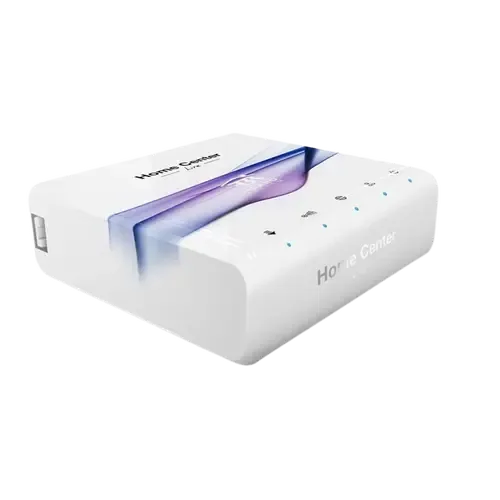
The Smart Device Compare comparison
Fibaro Home Center Lite vs X-Sense SBS50 Base Station
Understand the differences. Decide what matters to your home.
Build another comparison →Before you compare every specification
Key differences between Fibaro Home Center Lite and X-Sense SBS50 Base Station
A summary of selected recorded differences between these hubs. Check the full specification table below for details and conditions.
Feature differences among your selected devices
- Ethernet (connectivity): Fibaro Home Center Lite — Yes; X-Sense SBS50 Base Station — No (Wi-Fi is the only uplink; the specifications list no wired network port).
- Speakers (hardware): Fibaro Home Center Lite — No; X-Sense SBS50 Base Station — Yes (Built-in sounder rated at 100 dB, adjustable, that sounds together with every connected alarm).
- Google Home (integrations): Fibaro Home Center Lite — Yes; X-Sense SBS50 Base Station — No (X-Sense advertises Alexa as the only voice platform for its base station line and claims no Google support on the product page or the collection listings).
- Third Party Devices (protocols): Fibaro Home Center Lite — Yes (Pairs Z-Wave and Z-Wave Plus devices from other certified manufacturers, not only FIBARO; non-Z-Wave gear from other brands is reached only through network plugins.); X-Sense SBS50 Base Station — No (Links only X-Sense alarms and sensors (smoke, CO, combo, water leak, thermo-hygrometer) over its own 915/868 MHz radio, up to 50 devices; no other brands.).
Information still to confirm
- 6 of 31 comparison fields lack a resolved value for at least one selected device. Missing information is not evidence that a feature is absent.
- Check the full table and manufacturer documentation before ruling out a device.
These observations are derived from recorded catalog data and have not all been independently verified. Confirm details with the manufacturer before purchasing.
Compare capabilities, compatibility and setup requirements.
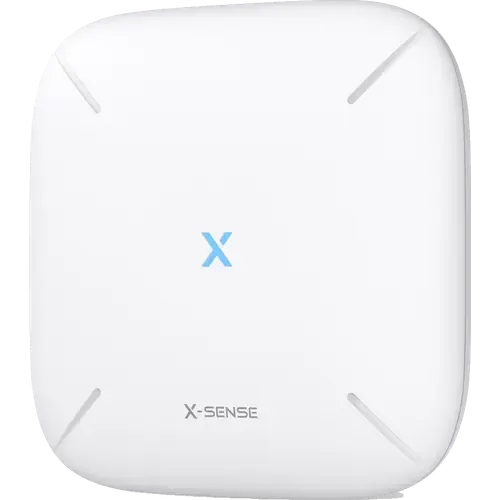
Option 2 · X-Sense
X-Sense SBS50 Base Station
Catalog update date not recorded
View full device profileWhat the catalog tells us
Understand the tradeoffs.
These counts describe the available data, not a quality score. More features do not automatically make a better device.
5differences with recorded values for every device
6rows with missing or unspecified information
Your priorities, side by side
Focus on what changes.
Mark the specifications you care about. Open manufacturer sources for verification scope; fields without citations remain catalog data. Expand notes for other qualifications.
Showing 31 of 31 rows. “Not recorded” does not mean “No”.
Connectivity
- Fibaro Home Center Lite
- Yes
- X-Sense SBS50 Base Station
- Yes
Catalog note
Official specifications list a 2.4 GHz Wi-Fi frequency and IEEE 802.11b/g/n as the wireless protocol
- Fibaro Home Center Lite
- Not recorded
- X-Sense SBS50 Base Station
- No
Catalog note
X-Sense states the base station is compatible with 2.4 GHz Wi-Fi only and is not compatible with a 5 GHz network
- Fibaro Home Center Lite
- Yes
- X-Sense SBS50 Base Station
- No
Catalog note
Wi-Fi is the only uplink; the specifications list no wired network port
Features
- Fibaro Home Center Lite
- No
- X-Sense SBS50 Base Station
- No
- Fibaro Home Center Lite
- No
- X-Sense SBS50 Base Station
- No
- Fibaro Home Center Lite
- No
- X-Sense SBS50 Base Station
- No
- Fibaro Home Center Lite
- Not recorded
- X-Sense SBS50 Base Station
- 50
Catalog note
X-Sense states one SBS50 manages up to 50 devices, with a cap of 10 STH51 thermo-hygrometers among them
- Fibaro Home Center Lite
- No
- X-Sense SBS50 Base Station
- No
Hardware
- Fibaro Home Center Lite
- Not recorded
- X-Sense SBS50 Base Station
- Not recorded
- Fibaro Home Center Lite
- Not recorded
- X-Sense SBS50 Base Station
- Not recorded
- Fibaro Home Center Lite
- No
- X-Sense SBS50 Base Station
- No
Catalog note
No microphone or voice feature is listed in the official specifications; the unit only signals with its LED and its sounder
- Fibaro Home Center Lite
- No
- X-Sense SBS50 Base Station
- No
Catalog note
The base station relays alarms to the X-Sense cloud and has no card slot or local storage of any kind
- Fibaro Home Center Lite
- No
- X-Sense SBS50 Base Station
- No
Catalog note
Powered by its bundled adapter (input 100-240 V AC 50/60 Hz, output 5.0 V 1.0 A) and has no Ethernet port at all
- Fibaro Home Center Lite
- No
- X-Sense SBS50 Base Station
- Yes
Catalog note
Built-in sounder rated at 100 dB, adjustable, that sounds together with every connected alarm
- Fibaro Home Center Lite
- Not recorded
- X-Sense SBS50 Base Station
- Not recorded
Integrations
- Fibaro Home Center Lite
- Yes
- X-Sense SBS50 Base Station
- Yes
Catalog note
X-Sense tags its base-station devices as Alexa Compatible, and the Amazon listings for the SBS50 accessories (the SKP0A keypad, the SDS0A door sensor and the SMS0A motion sensor) state Compatible with Alexa, Requires SBS50 Base Station, so the base station is the Alexa bridge for the system
- Fibaro Home Center Lite
- No
Catalog note
No native HomeKit bridge; only third-party Homebridge plugins
- X-Sense SBS50 Base Station
- No
Catalog note
X-Sense claims no HomeKit support for this model, and the SBS50 is not Matter certified so it has no Matter path into Apple Home either
- Fibaro Home Center Lite
- Yes
- X-Sense SBS50 Base Station
- No
Catalog note
X-Sense advertises Alexa as the only voice platform for its base station line and claims no Google support on the product page or the collection listings
- Fibaro Home Center Lite
- Yes
- X-Sense SBS50 Base Station
- Yes
Catalog note
X-Sense states that its Home Assistant compatibility runs through the SBS50 base station ecosystem, and the python-xsense library behind the community HACS integration maps SBS50 explicitly as a base station entity
- Fibaro Home Center Lite
- No
- X-Sense SBS50 Base Station
- No
Catalog note
X-Sense claims no SmartThings support for this model, and the SBS50 is not Matter certified so the automatic Works with SmartThings grant does not apply
Protocols
- Fibaro Home Center Lite
- Not recorded
- X-Sense SBS50 Base Station
- No
Catalog note
The specifications enumerate the radios as IEEE 802.11b/g/n Wi-Fi plus the 915 MHz (US) and 868 MHz (EU) sub-GHz link to the alarms, with no Bluetooth
- Fibaro Home Center Lite
- No
- X-Sense SBS50 Base Station
- No
- Fibaro Home Center Lite
- No
- X-Sense SBS50 Base Station
- No
Catalog note
The CSA certified-products database lists only the separate SBS0A Matter base station for X-Sense; the SBS50 has no Matter certification and exposes its sub-devices through the X-Sense app instead
- Fibaro Home Center Lite
- Yes
Catalog note
Pairs Z-Wave and Z-Wave Plus devices from other certified manufacturers, not only FIBARO; non-Z-Wave gear from other brands is reached only through network plugins.
- X-Sense SBS50 Base Station
- No
Catalog note
Links only X-Sense alarms and sensors (smoke, CO, combo, water leak, thermo-hygrometer) over its own 915/868 MHz radio, up to 50 devices; no other brands.
- Fibaro Home Center Lite
- No
- X-Sense SBS50 Base Station
- No
- Fibaro Home Center Lite
- Yes
- X-Sense SBS50 Base Station
- No
- Fibaro Home Center Lite
- No
- X-Sense SBS50 Base Station
- No
Catalog note
Sub-devices join over X-Sense's own Link+ Pro radio at 915 MHz (US) or 868 MHz (EU), not Zigbee
Sensors
- Fibaro Home Center Lite
- No
- X-Sense SBS50 Base Station
- No
Catalog note
Humidity comes from the paired thermo-hygrometers; the 0-85% RH figure is the base station's operating range
- Fibaro Home Center Lite
- No
- X-Sense SBS50 Base Station
- No
Catalog note
The three-colour LED is an indicator, not an ambient light sensor
- Fibaro Home Center Lite
- No
- X-Sense SBS50 Base Station
- No
Catalog note
Motion is detected by the separate SMS0A sensor, which reports through the base station
- Fibaro Home Center Lite
- No
- X-Sense SBS50 Base Station
- No
Catalog note
The base station reads temperature only from the STH51 and STH0A thermo-hygrometers paired to it; the 4.4-37.8 C figure in its specifications is its own operating range, not a reading it takes
| Specification | Fibaro Home Center Lite | X-Sense SBS50 Base Station |
|---|---|---|
| Connectivity | ||
| Yes | YesCatalog noteOfficial specifications list a 2.4 GHz Wi-Fi frequency and IEEE 802.11b/g/n as the wireless protocol | |
| Not recorded | NoCatalog noteX-Sense states the base station is compatible with 2.4 GHz Wi-Fi only and is not compatible with a 5 GHz network | |
| Yes | NoCatalog noteWi-Fi is the only uplink; the specifications list no wired network port | |
| Features | ||
| No | No | |
| No | No | |
| No | No | |
| Not recorded | 50Catalog noteX-Sense states one SBS50 manages up to 50 devices, with a cap of 10 STH51 thermo-hygrometers among them | |
| No | No | |
| Hardware | ||
| Not recorded | Not recorded | |
| Not recorded | Not recorded | |
| No | NoCatalog noteNo microphone or voice feature is listed in the official specifications; the unit only signals with its LED and its sounder | |
| No | NoCatalog noteThe base station relays alarms to the X-Sense cloud and has no card slot or local storage of any kind | |
| No | NoCatalog notePowered by its bundled adapter (input 100-240 V AC 50/60 Hz, output 5.0 V 1.0 A) and has no Ethernet port at all | |
| No | YesCatalog noteBuilt-in sounder rated at 100 dB, adjustable, that sounds together with every connected alarm | |
| Not recorded | Not recorded | |
| Integrations | ||
| Yes | YesCatalog noteX-Sense tags its base-station devices as Alexa Compatible, and the Amazon listings for the SBS50 accessories (the SKP0A keypad, the SDS0A door sensor and the SMS0A motion sensor) state Compatible with Alexa, Requires SBS50 Base Station, so the base station is the Alexa bridge for the system | |
NoCatalog noteNo native HomeKit bridge; only third-party Homebridge plugins | NoCatalog noteX-Sense claims no HomeKit support for this model, and the SBS50 is not Matter certified so it has no Matter path into Apple Home either | |
| Yes | NoCatalog noteX-Sense advertises Alexa as the only voice platform for its base station line and claims no Google support on the product page or the collection listings | |
| Yes | YesCatalog noteX-Sense states that its Home Assistant compatibility runs through the SBS50 base station ecosystem, and the python-xsense library behind the community HACS integration maps SBS50 explicitly as a base station entity | |
| No | NoCatalog noteX-Sense claims no SmartThings support for this model, and the SBS50 is not Matter certified so the automatic Works with SmartThings grant does not apply | |
| Protocols | ||
| Not recorded | NoCatalog noteThe specifications enumerate the radios as IEEE 802.11b/g/n Wi-Fi plus the 915 MHz (US) and 868 MHz (EU) sub-GHz link to the alarms, with no Bluetooth | |
| No | No | |
| No | NoCatalog noteThe CSA certified-products database lists only the separate SBS0A Matter base station for X-Sense; the SBS50 has no Matter certification and exposes its sub-devices through the X-Sense app instead | |
YesCatalog notePairs Z-Wave and Z-Wave Plus devices from other certified manufacturers, not only FIBARO; non-Z-Wave gear from other brands is reached only through network plugins. | NoCatalog noteLinks only X-Sense alarms and sensors (smoke, CO, combo, water leak, thermo-hygrometer) over its own 915/868 MHz radio, up to 50 devices; no other brands. | |
| No | No | |
| Yes | No | |
| No | NoCatalog noteSub-devices join over X-Sense's own Link+ Pro radio at 915 MHz (US) or 868 MHz (EU), not Zigbee | |
| Sensors | ||
| No | NoCatalog noteHumidity comes from the paired thermo-hygrometers; the 0-85% RH figure is the base station's operating range | |
| No | NoCatalog noteThe three-colour LED is an indicator, not an ambient light sensor | |
| No | NoCatalog noteMotion is detected by the separate SMS0A sensor, which reports through the base station | |
| No | NoCatalog noteThe base station reads temperature only from the STH51 and STH0A thermo-hygrometers paired to it; the 4.4-37.8 C figure in its specifications is its own operating range, not a reading it takes | |
Know what’s behind the comparison.
The table matches specifications by section and field. It preserves notes, separates missing data from explicit “No” values, and keeps qualifications attached to their values. No overall winner is assigned from feature counts.
Read our comparison methodology